
'Companies are coming to the campuses, and we have companies booking their slots for the placement season, but the overall number of companies signing is low, and the hiring numbers are also lower.'

'it's not just youth in India who are left behind because of their inability to find jobs; nearly two-thirds of Indian women of working ages do not participate at all in the paid labour force.'

'We emphasise the importance of not basing investment decisions solely on electoral outcomes.' 'Instead, focusing on investing in high-quality businesses capable of prospering regardless of the political landscape is paramount.'

Following are comments from economists at leading financial institutions, banks and rating agencies on the interim Budget:

Department of financial services secretary Sanjay Malhotra held a meeting with heads of PSBs, insurance companies and financial institutions for identifying ways to support Agniveers on completion of their tenure of duty.

Mutual funds' equity buying remained elevated for the fifth consecutive month in December, taking the net equity purchase past Rs 1.7 trillion in 2023. The aggressive buying in December indicates that flows into equity funds are likely to have remained unaffected by the sharp run-up in the market last month. Mutual funds (MFs) bought equities worth Rs 23,000 crore last month (until December 28) compared to Rs 18,000 crore in November, shows data from the Securities and Exchange Board of India (Sebi).

Life insurance premium rates are likely to drop over the next few months owing to longer life expectancy, with a new mortality and morbidity table expected to be in place by the fourth quarter of 2009 to replace the current one, which is of 1994-96 vintage.

The investment limit for foreign entities in Indian stock exchanges will be enhanced from 5 per cent to 15 per cent on par with domestic institutions.

Global investment firm Blackstone on Wednesday sold its entire 23.5 per cent stake in Embassy Office Parks REIT for around Rs 7,100 crore, according to sources. Embassy Office Parks REIT is India's first Real Estate Investment Trust (REIT) sponsored by Blackstone and Bengaluru-based realty firm Embassy group. Blackstone sold its stake in the entity at around Rs 316 per share through open market transactions and at this price, the deal is valued at about Rs 7,100 crore, the sources said.

To curb mis-selling of policies and rationalise commissions, radical changes have been proposed to help investors.

Stocks of public sector undertakings (PSUs) have been on fire in the past year as investors cheered an improvement in key operating metrics and embraced counters of these state-owned enterprises, analysts suggest. The S&P BSE PSU Index has gained over 90 per cent in the past year, rising much higher than the S&P BSE Sensex, which has rose nearly 19 per cent during this period, according to ACE Equity data. The BSE PSU Index, reports show, has delivered a compound annual growth rate (CAGR) of 28 per cent (including dividends reinvestments) over five years and risen by almost 60 per cent in the past year.

Bupa and Axa have already declared their intention to raise stakes.

A remarkable story which helped in transforming a bureaucratic organization, to a customer centric organization. This experience may inspire several government / private organizations to modify or adopt digitisation to transform their business, notes Professor N Ravichandran (retd).

Heatwaves claimed more than 17,000 lives in 50 years in India, according to a paper authored by M Rajeevan, former secretary of Ministry of Earth Sciences, along with scientists Kamaljit Ray, S S Ray, R K Giri and A P Dimri.

The rupee breached the 80-mark against the dollar on Tuesday. The steady depreciation in the value of the rupee against the US dollar is likely to prove expensive for corporate India. The listed companies' revenue expenses in foreign currency or imports exceed their export revenues or revenue earnings in forex. In their latest financial year, BSE500 companies, excluding banks and non-banking finance companies and insurance (BFSI), reported combined forex expenses of Rs 12.31 trillion against forex earnings of around Rs 10 trillion.

Brokerages expect India Inc to report an upturn in earnings for the March quarter of 2022-23, after a relatively muted showing in the previous two quarters. This growth is expected to be led by banking, financial services and insurance (BFSI) companies, FMCG firms, and automobile makers. The combined net profit of the Nifty50 companies (excluding Adani Enterprises) is expected to have grown 15.6 per cent to Rs 1.77 trillion in Q4FY23, from Rs 1.53 trillion a year ago.

...benefiting 350,000 persons. Also, Trai detected and blocked seven million mobile phone connections involved in cyber fraud and suspicious activities.

The Reserve Bank on Wednesday allowed inbound travellers from G20 nations arriving at select airports to use the popular UPI for making payments in the country. Later, the RBI also proposes to extend the Unified Payments Interface (UPI) facility to travellers from all countries. UPI is a system that powers multiple bank accounts into a single mobile application, merging several banking features, seamless fund routing & merchant payments into one hood.

The message is clear: The 60-year-old wise uncles need to handhold the 40-year-old entrepreneurs when, obsessed with ambition and greed for growth, they become a victim of hubris, points out Tamal Bandyopadhyay.

Cyber crimes caused by the insured's employees also get covered under the policy but would exclude the actual perpetrator.

A few years ago, when top officials of Indian state-run refiners went to Dubai to negotiate a crude oil supply contract, a senior official from state-owned Saudi Aramco told them, "We can negotiate on anything, but I am the last man standing for you. "Nobody can offer the range of crudes we do with certainty," an official who was part of the negotiating team recalls. Perhaps that explains why Saudi Arabia is less concerned about losing its place as India's premier oil supplier to an upstart like Russia, which emerged from nowhere to become India's biggest crude oil supplier in September and October.

In a relief to FMCG major Dabur, two of its foreign subsidiaries, Dabur International and Dermoviva Skin Essentials, have been removed as a defendant in multiple lawsuits filed in a US court over allegations that their hair-relaxer products caused ovarian cancer, uterine cancer and other related health issues. However, lawsuits filed against its third international subsidiary Namaste Laboratories LLC, would continue before the US District Court for the Northern District of Illinois, according to a statement from Dabur on Wednesday. Dabur International and Dermoviva were removed and got relief in the multiple suits due to lack of jurisdiction as they have not either manufactured, marketed, distributed or sold hair relaxer products in the US, it added.

As the Narendra Modi government nears completing a year in office, the Congress on Wednesday stepped up its offensive against the prime minister accusing him of weakening democracy by running a "one-man show" while scoring maximum on "arrogance" and minimum on governance.
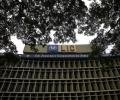
Initial public offering (IPO)-bound Life Insurance Corporation (LIC) of India's assets under management (AUM) increased to Rs 38 trillion as of September 2021, compared with Rs 37 trillion as of March 2021, said sources in the know. Its AUM is almost 3x the AUM of all the private life insurers in the country and over 15x more than the AUM of the second largest life insurer, SBI Life, as of September 2021. SBI Life's AUM was approximately Rs 2.4 trillion as of September 2021, said sources.

Not just unclaimed bank deposits, there are thousands of crores of rupees locked in unclaimed shares and insurance policies lying with many institutions across India.

The government on Monday budgeted Rs 1.75 lakh crore from stake sale in public sector companies and financial institutions, including 2 PSU banks and one general insurance company, in the next fiscal year beginning April 1. The amount is lower than the record Rs 2.10 lakh crore which was budgeted to be raised from CPSE disinvestment in the current fiscal year. However, the COVID-19 pandemic impacted the government's CPSE stake sale programme, and the target has been lowered to Rs 32,000 crore in the Revised Estimates.

'A key reason for the strong interest in IPOs has been an increased focus on profitability and reasonable pricing of deals.'

In his poll rallies, Modi framed Pitroda's comments in his wider onslaught against the Congress, asserting that they have exposed its hidden agenda and that the party has become so removed from the country's social and family values that it wants to legally rob people of their assets and lifelong savings they want to bequeath to their children.

The Navi lending app, launched in May, provides instant loans of up to Rs 5 lakh, with repayment tenures of up to 36 months.

'How can you explain the necessity of selling an institution that has been delivering regular returns to the government, that has never asked for any capital from the government, that has invested Rs 38 lakh crores in the Indian economy and that owns 4 per cent of the market capitalisation in India?'
India's largest insurer LIC is likely to list on the stock exchanges on May 17, a week after its bumper initial public offering (IPO) closes. The government is selling over 22.13 crore shares in LIC at a price band of Rs 902-949 a piece in the initial public offering, which opens on May 4 and closes on May 9. As per the final papers filed with Sebi, the allotment of shares to the demat account of bidders will happen by May 16, post which LIC would commence trading of equity shares in the stock exchanges and list "on or about May 17".

Currently, the select committee is considering the Bill.

From the enactment of the capital control Act to the recognition of the BSE as a stock exchange and the infamous Harshad Mehta scam, here are the 18 biggest events for stock markets from 1947 to 1993.

'Somebody was using somebody to make statements that will stir the stock market and lead to a surge.' 'A sudden surge and a sudden crash is always an ideal situation for people to make illicit gains and then siphoning off the money.'
LIC's public offer, the country's biggest-ever IPO, witnessed full subscription of the retail portion on day three on Friday. The overall issue was subscribed 1.38 times, according to data posted on stock exchanges on 7 pm. Against 16,20,78,067 shares on offer, 22,36,98,915 bids were received. However, the Qualified Institutional Buyer (QIB) and Non-Institutional Investor (NII) portions are yet to be fully subscribed.
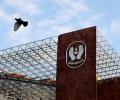
LIC's public offer, the country's biggest-ever IPO, was fully subscribed on the second day of bidding on Thursday. Against 16,20,78,067 shares on offer, 16,68,60,765 bids were received -- translating into a subscription of 1.03 times, as per data on stock exchanges as of 7 pm. However, the Qualified Institutional Buyer (QIB) and Non-Institutional Investor (NII) portions have received a tepid response so far.

rediffGURU Samkit Maniar answers readers' personal income tax queries

Right to apprenticeship, legal guarantee for MSP, passing a constitutional amendment to raise the 50 per cent cap on reservations for SCs, STs and OBCs, a nation-wide caste census and scrapping of Agnipath scheme are among the promises made by the Congress in its Lok Sabha polls manifesto released on Friday.
LIC public offer, the country's biggest-ever IPO, on Wednesday opened for subscription for retail and institutional investors. The government aims to generate about Rs 21,000 crore by diluting its 3.5 per cent stake in the insurance behemoth. The LIC initial public offering (IPO), now open for retail and institutional investors, is set to close on May 9. LIC has fixed the price band at Rs 902-949 per equity share for the issue.
LIC's public offer, the country's biggest-ever IPO, saw the policyholders' portion being oversubscribed on the first day itself on Wednesday, though overall subscription stood at just 66 per cent. The government aims to generate about Rs 21,000 crore by selling 3.5 per cent stake in the insurance behemoth. The LIC initial public offering (IPO), open for retail and institutional investors, is set to close on May 9. The issue period also includes bidding on Saturday, May 7.
